

Beyond St Andrews lies another side of Scotland, one that feels bigger, wilder, and a little more personal.
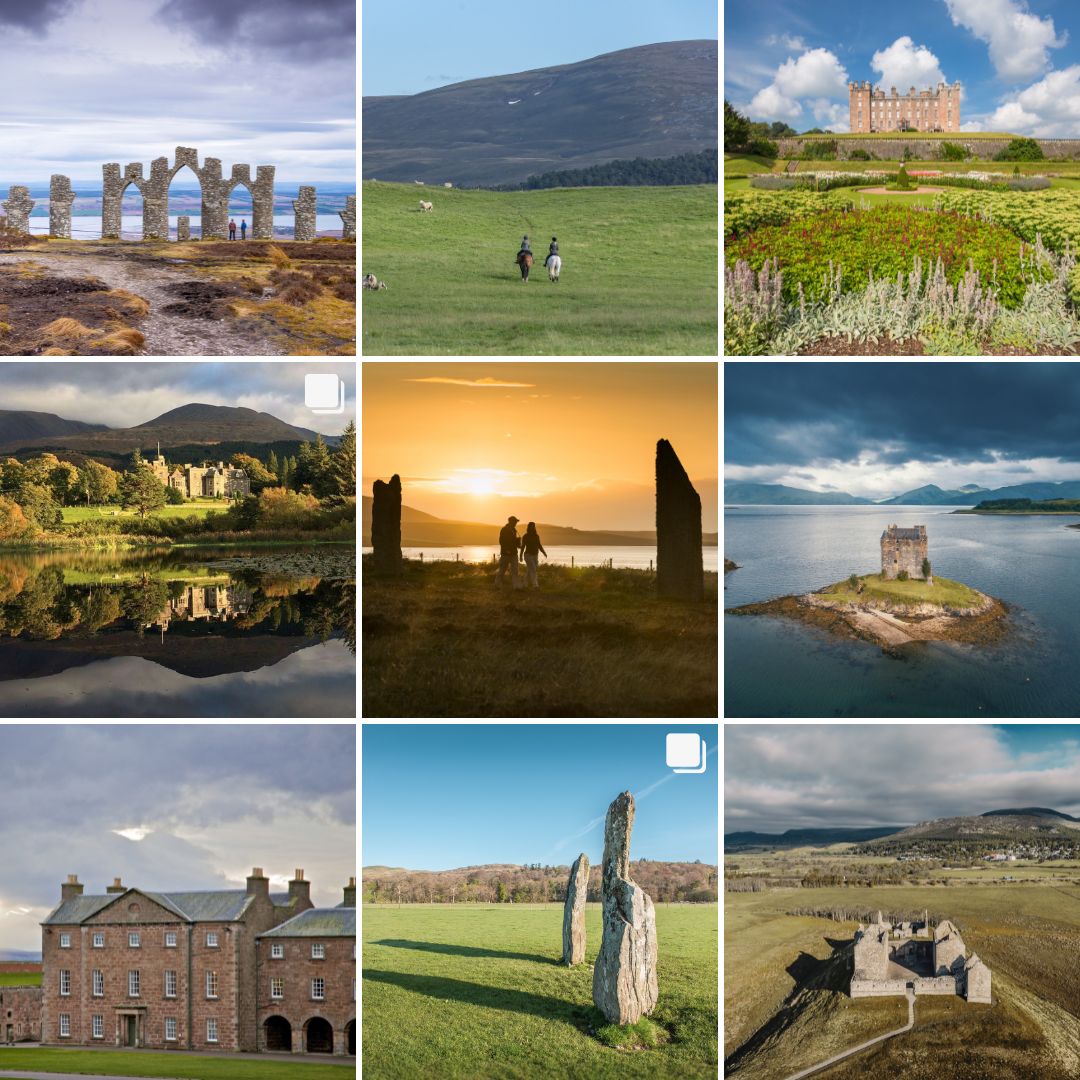
Up here in the Highlands, the landscape stretches out in every direction: wide skies, sea lochs that mirror the mountains, and light that changes by the hour across heather-covered hills. It’s the Scotland many travelers imagine before they ever arrive, the one of castles, clan history, and quiet roads that wind through dramatic scenery.
Golf exists here, of course. Some of the world’s greatest courses are tucked along these rugged coastlines. But in the Highlands, golf is simply part of the story, not the entire reason to come.
This is a place where days unfold slowly, often ending with a fireside dram of whisky and the feeling that you’ve discovered a version of Scotland that most travelers never quite reach.
Why the Highlands Feel Like the “Real” Scotland
If you picture Scotland as untamed and cinematic, rolling green hills, mist drifting across mountains, red deer roaming freely, and shaggy Highland cows grazing in open pastures, you’re picturing the Highlands.
This is a region steeped in legend and history. Clan rivalries once shaped the land, and the echoes of those stories still live on in castles, ancient battlefields, and centuries-old villages.
It’s also the birthplace of two of Scotland’s greatest exports: golf and whisky.
Across the Highlands, golf courses feel like they belong exactly where they are, woven into dunes, cliffs, and rugged coastlines rather than built on top of them.
Even if golf isn’t the focus of your trip, it’s hard not to appreciate how seamlessly the game fits into the landscape here.
The Other Great Highland Tradition: Whisky
Travel through the Highlands, and you’ll eventually reach Speyside, one of the most famous whisky regions in the world.
The air here often carries the faint scent of malt and peat drifting from distilleries that have been perfecting their craft for generations. Iconic names like The Macallan and The Glenlivet call this region home, and tastings often feel less like a tour and more like a cultural introduction.
Pair a few drams with local seafood or game, and you begin to understand how deeply food, landscape, and tradition are tied together in Scotland.
What to Experience in the Highlands
The beauty of the Highlands is that the experiences feel authentic rather than curated. A few highlights travelers love:
Explore the legends of Loch Ness
A private boat cruise across Loch Ness offers sweeping views of the Highlands and the haunting ruins of Urquhart Castle. Whether or not you believe in Nessie, the landscape itself is unforgettable.
Visit royal history at Balmoral
The Highlands have long been a retreat for the British royal family. A visit to Balmoral Castle offers a glimpse into that tradition, with beautifully kept gardens and a sense of quiet grandeur.
Wildlife and coastal villages
On the Black Isle, charming villages meet rugged coastlines where bottlenose dolphins can often be spotted offshore.
Highland craft and culture
Travelers can design a custom kilt, visit local artisans, or even try traditional crafts like glassblowing, experiences that bring Scotland’s heritage to life in a hands-on way.
Golf in the Highlands (Even If You’re Not a Golfer)
While golf isn’t the entire focus of a Highlands trip, it’s hard to ignore the caliber of courses here.
Legendary venues like Royal Dornoch Golf Club consistently rank among the world’s best. Nearby, Brora Golf Club remains wonderfully traditional, sheep still graze the fairways.
More modern designs like Cabot Highlands bring contemporary architecture to the Highlands without losing the natural feel of the land.
Even travelers who don’t play often enjoy visiting these courses for the scenery alone.
When to Visit
The best time to explore the Highlands is May through September, when Scotland’s famously long summer days stretch well into the evening.
In June and July, daylight can last nearly 18 hours, perfect for scenic drives, castle visits, and lingering dinners after a full day outdoors.
Spring and early fall are especially appealing for travelers who want fewer crowds while still enjoying mild weather and vibrant landscapes.
Winter can be beautiful, but it is typically better suited for shorter visits rather than extended exploration.
How Long to Stay
The Highlands are best experienced at a slower pace.
Plan at least 5–7 nights, though many travelers prefer closer to 8–10 days to fully appreciate the region.
A typical journey might include:
- Inverness and the surrounding Highlands
- Speyside for whisky experiences
- Coastal villages and castle visits
- Optional golf along the northern coast
Many travelers combine the Highlands with time in St Andrews or continue onward to Ireland or Northern Ireland for a broader journey across the British Isles.
Planning Ahead
The Highlands may feel remote, but the best experiences here require thoughtful planning.
Top golf tee times, boutique lodges, and historic estates often book 12–18 months in advance, especially for summer travel.
The payoff, however, is a trip that feels deeply personal, one where travelers leave with stories that go far beyond a single famous town or landmark.
Because in the Highlands, Scotland reveals itself slowly.
And that’s exactly the point.


